What are adaptogens? The Myco Max adaptogenic herb blend explained

Updated September 2026 · reviewed by the Myco Max Research Team. We are an independent information resource, not a medical provider, and this article is educational rather than medical advice.
Adaptogens are a group of herbs and mushrooms traditionally used to help the body cope with everyday physical, mental and environmental stress, working with your own stress-response systems rather than acting as a stimulant or a sedative. In this guide we explain what adaptogens are, what the evidence really shows, and how four adaptogenic and traditional botanicals — rhodiola, tribulus, sage and gotu kola — are used inside Myco Max. The most-cited attempt to formalise the idea is a review of the proposed stress-protective mechanisms of adaptogens on the central nervous system (Panossian et al., Pharmaceuticals, 2010).
What adaptogens are, in one honest paragraph.
- The short version
- Adaptogens are wellness botanicals said to help the body adapt to stress and fatigue — supports, not medicines, and not a treatment for any disease.
- The classic example
- Rhodiola rosea is the best-studied adaptogen in Myco Max, traditionally used for resilience against everyday tiredness.
- What to expect
- A gradual, steadier feel over weeks — not a caffeine-style jolt. Evidence is promising for some herbs, mixed for others.
- Where Myco Max fits
- It combines functional mushrooms with rhodiola, tribulus, sage and gotu kola as once-daily liquid drops.
The word “adaptogen” is everywhere in 2026 but rarely explained clearly. Below we cut through the marketing and show which adaptogenic herbs sit inside a functional-mushroom formula like Myco Max, and why.
What are adaptogens, exactly?
An adaptogen is a natural substance — usually a herb or a mushroom — traditionally used to help the body resist and adapt to stress without over-stimulating or sedating it. The term was coined by Soviet scientists in the mid-20th century to describe plants that seemed to raise the body's non-specific resistance to fatigue and strain. A classic adaptogen is generally expected to be broadly safe and to work in a “normalising” way, helping the body return to balance rather than pushing one system hard in a single direction. Rhodiola is the group's best-evidenced member, with a randomised placebo-controlled trial in stress-related fatigue (Olsson et al., Planta Medica, 2009).
It is worth being honest: “adaptogen” is a traditional wellness category, not a regulatory or medical classification. The FDA does not certify a herb as an adaptogen, which is why responsible brands describe them as supports for everyday wellbeing rather than treatments. The NCCIH overview of stress and complementary approaches is a sensible reality check on what any herb can do here (NIH NCCIH).
How do adaptogens actually work in the body?
The leading idea is that adaptogens gently influence the body's stress-response machinery, especially the hypothalamic-pituitary-adrenal (HPA) axis and the stress hormones it governs. Rather than forcing a single pathway, they are thought to nudge these systems toward balance, so the body copes a little more smoothly with everyday demands.
In practice, adaptogens tend to be subtle and cumulative. You are not chasing the sharp lift of caffeine; you are aiming for a steadier baseline over time. Because the effect is gentle, they are taken daily and judged over weeks, and they work best on top of the fundamentals — sleep, food and movement — as our guide on supporting memory and focus naturally explains.
See the exact dose in Myco Max →
Which adaptogenic herbs are in Myco Max?
Myco Max is built on functional mushrooms — lion's mane and cordyceps — and rounds them out with a small botanical blend that leans adaptogenic: rhodiola rosea, tribulus terrestris, sage and gotu kola. Rhodiola is the textbook adaptogen; the others are traditional tonic herbs frequently grouped alongside adaptogens. Here is how each earns its place.
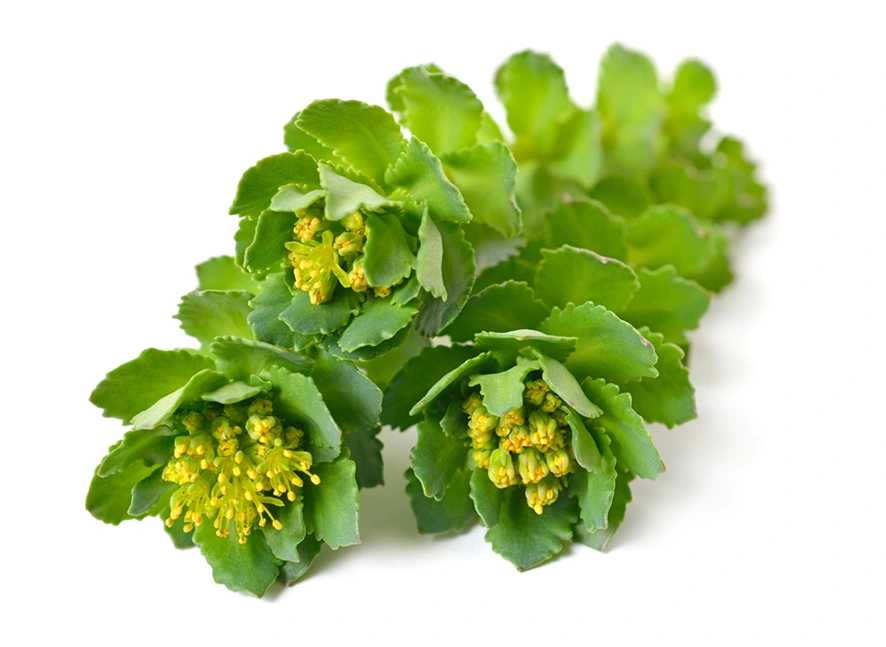
Rhodiola rosea — the classic adaptogen
Rhodiola rosea is an arctic root and the most genuinely “adaptogenic” ingredient in Myco Max, traditionally used to support resilience against everyday fatigue and mental stress. It is one of the few adaptogens with a reasonable base of human research suggesting it may help with tiredness and mental strain, though results are mixed and studies are small. Read our note on rhodiola rosea in Myco Max.
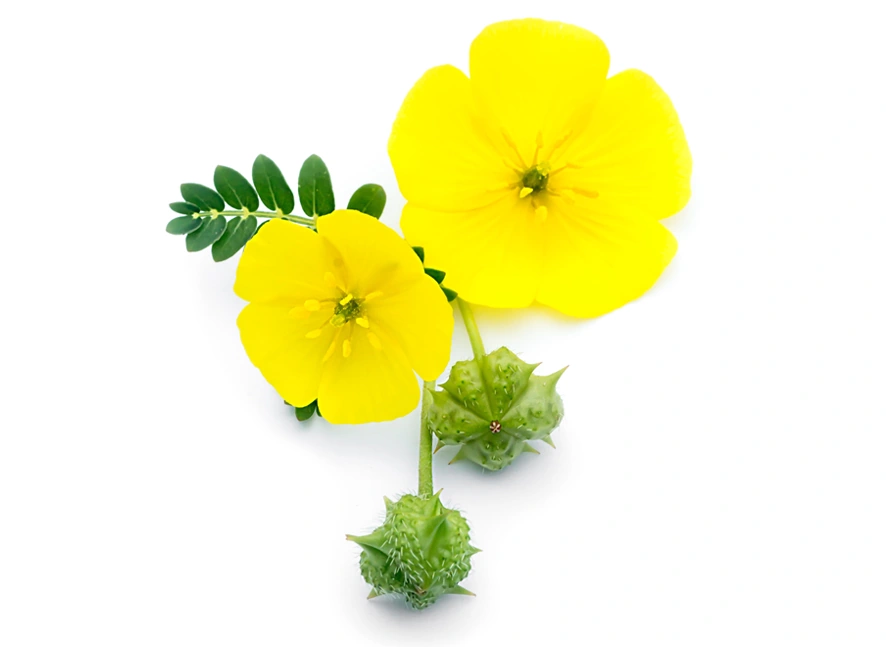
Tribulus terrestris — a long-used botanical
Tribulus terrestris is a Mediterranean and Asian plant with a long history in traditional wellness, often included in vitality-focused blends. Its modern evidence is limited and largely inconclusive, so we describe it honestly as a traditional botanical rather than a proven active. Read more on tribulus terrestris in Myco Max.
Sage — a culinary herb with a memory reputation
Sage (Salvia) is a common culinary herb with a folk history connected to memory and clear thinking, and a small body of early research has explored its compounds. The garden-variety herb you cook with is well tolerated, and it contributes to the Myco Max botanical blend.
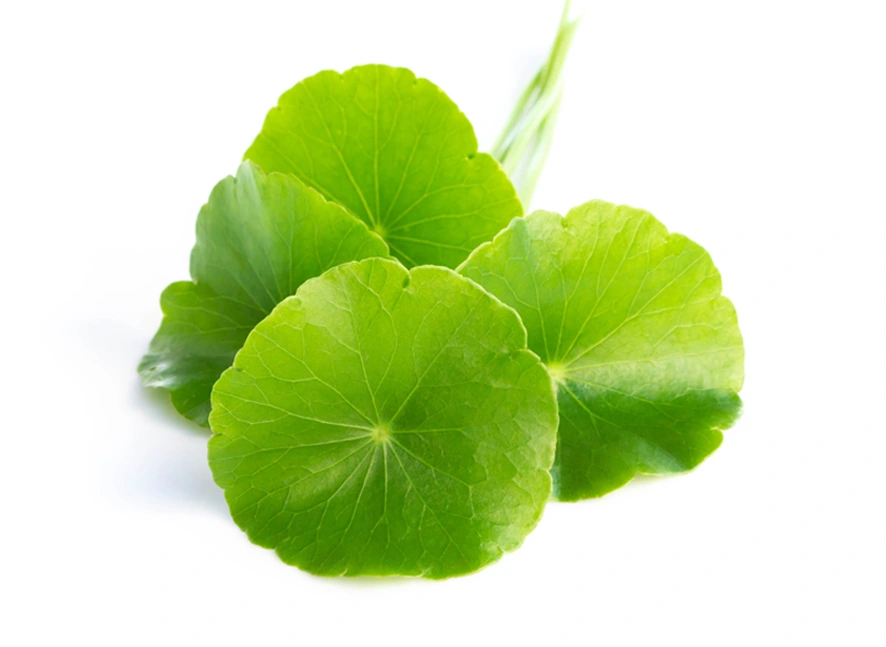
Gotu kola — the Ayurvedic calming tonic
Gotu kola (Centella asiatica) is an Ayurvedic staple used for generations as a calming tonic for the mind, and it is frequently grouped with adaptogens. Like the others, it is best thought of as a traditional support rather than a treatment, and it rounds out the Myco Max blend.
| Botanical in Myco Max | Category | Traditional / general role | Strength of evidence |
|---|---|---|---|
| Rhodiola rosea | Classic adaptogen | Resilience against everyday fatigue and mental stress | Moderate, but mixed |
| Tribulus terrestris | Traditional botanical | Long used in vitality-focused blends | Limited / inconclusive |
| Sage (Salvia) | Culinary herb | Folk history linked to memory | Early / preliminary |
| Gotu kola | Traditional tonic | Ayurvedic calming tonic for the mind | Early / preliminary |
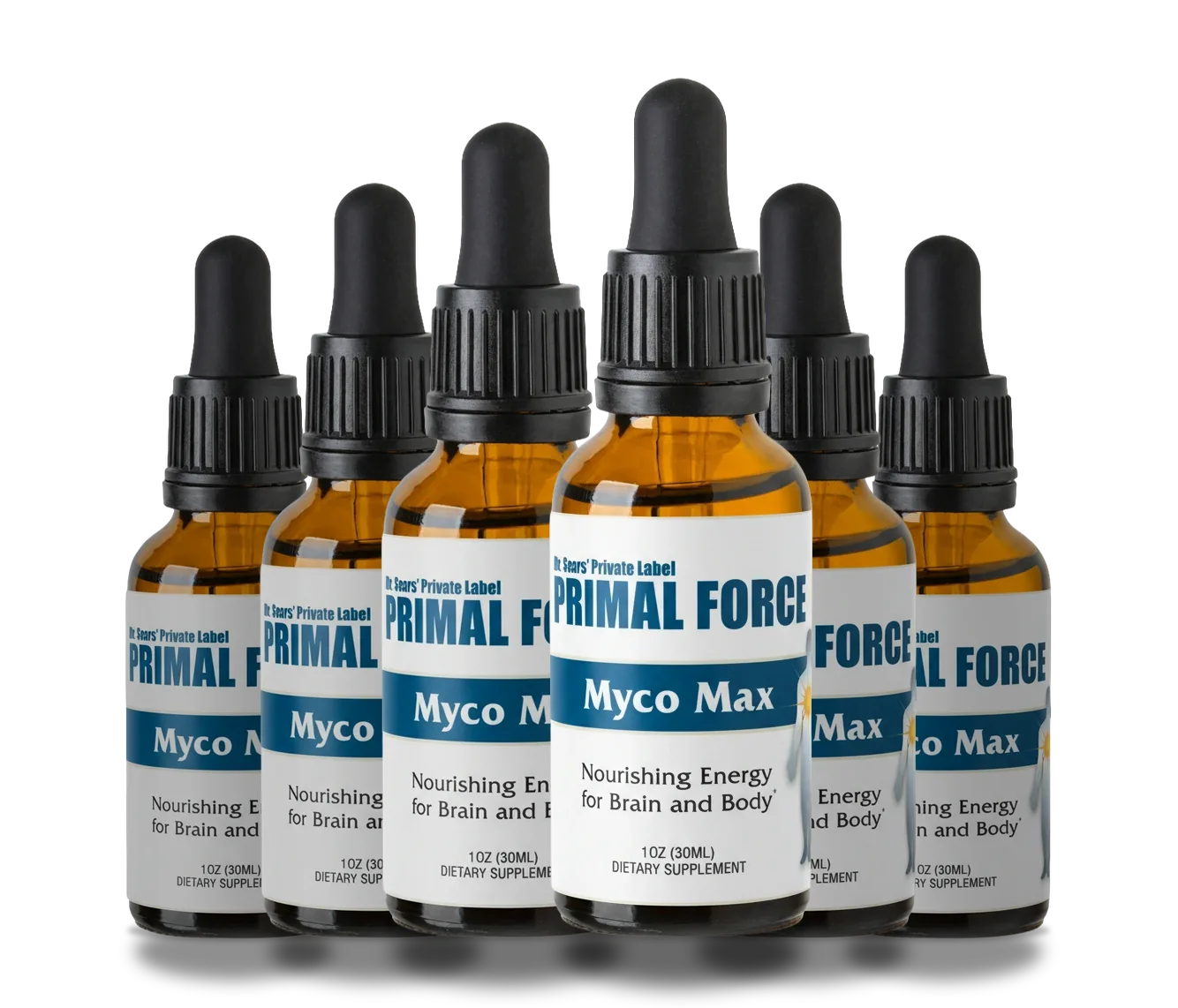
The full adaptogen blend in one dropper
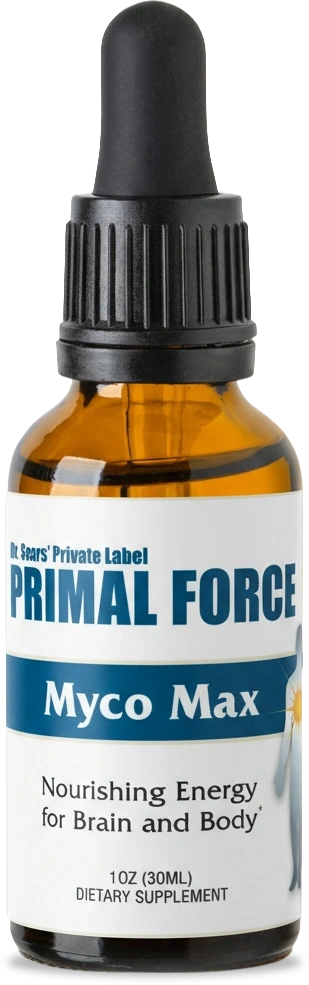
Myco Max pairs lion's mane and cordyceps with rhodiola, tribulus, sage and gotu kola in a once-daily liquid dropper. The six-bottle bundle is the best value at $49 per bottle, with free U.S. shipping and a 90-day guarantee.
Check today's Myco Max pricing — from $49/bottleWhat does the evidence really say about adaptogens?
The honest summary is that adaptogen research is promising in places and thin in others. Rhodiola rosea has the strongest human evidence of the herbs in Myco Max, with several trials pointing to possible support for fatigue and mental stress, though studies are small and varied in quality. Sage and gotu kola have early findings but far less high-quality data, and tribulus remains largely inconclusive.
None of this means adaptogens are useless — the sensible way to view them is as gentle supports whose benefits are real for some people and modest overall. Where the evidence is weak, we say so, and any “miracle” claim deserves scepticism.
Adaptogens for stress: what should you realistically expect?
Adaptogens are marketed heavily for stress, so it helps to set expectations honestly. At their best, adaptogens like rhodiola may help you feel a little steadier and less depleted when demands pile up — a smoother baseline, not a dramatic change. What they will not do is erase stress, replace rest, or treat anxiety or any medical condition. If stress is affecting your daily life, that is a conversation for a doctor.
The realistic mindset is “supportive and cumulative.” Take the herbs consistently, keep your sleep and movement in place, and give it time.
| Question | Realistic answer |
|---|---|
| How fast do they act? | Slowly — usually judged over several weeks of daily use, not hours. |
| What does the effect feel like? | A steadier, less depleted baseline; not a caffeine-style jolt. |
| Are they a stress cure? | No. They are supports, not treatments for stress, anxiety or any disease. |
| Do they replace sleep and exercise? | No — they work best on top of those fundamentals. |
| Is the evidence settled? | Promising for rhodiola, mixed to early for the rest. |
How do you use adaptogens safely?
For most healthy adults, culinary and well-studied adaptogens at typical supplement doses are generally considered well tolerated for daily use. The safe approach is simple: take them at the same time each day, follow the label, and watch how you feel over a few weeks. In Myco Max that means one dropper full, shaken and swallowed, ideally in the morning.
Caution matters more for some people than others. Because certain botanicals can interact with medicines, ask your doctor first if you are pregnant or nursing, under 18, taking any medication, or managing a health condition. Adaptogens are supplements, not a substitute for medical care, and persistent symptoms deserve a professional opinion.
Are adaptogens the same as functional mushrooms?
Adaptogens and functional mushrooms overlap but are not the same. Classic adaptogens like rhodiola are flowering plants and roots, while functional mushrooms such as lion's mane and cordyceps are fungi sometimes grouped under the adaptogen umbrella. Myco Max spans both: functional mushrooms as its backbone, adaptogenic botanicals on top. To see how the mushroom side compares, read nootropic mushrooms for focus and clarity.
Frequently asked questions
What are adaptogens in simple terms?
Adaptogens are a group of herbs and mushrooms traditionally used to help the body cope with everyday physical, mental and environmental stress. The idea is that they gently support your own stress-response systems rather than acting like a stimulant or a sedative. They are wellness botanicals, not medicines, and they are not a treatment for any disease.
Which adaptogenic herbs are in Myco Max?
Myco Max pairs functional mushrooms with a small adaptogen-leaning botanical blend that includes rhodiola rosea, tribulus terrestris, sage and gotu kola. Rhodiola is the classic adaptogen of the group, while sage and gotu kola are traditional tonics and tribulus is a long-used botanical, all delivered as once-daily liquid drops.
Do adaptogens actually work for stress?
Some adaptogens, especially rhodiola rosea, have human studies suggesting they may support resilience against everyday fatigue and mental stress, but the overall evidence is mixed and many trials are small. Adaptogens may help you feel steadier as part of good sleep, diet and movement habits, but they are not a cure for stress or anxiety and should not replace medical care.
How long do adaptogens take to work?
Adaptogens are generally slow, cumulative botanicals rather than fast stimulants, so most people take them daily for several weeks before judging any effect. A few people notice a calmer, steadier feel sooner, but consistency over a few months is the realistic way to use them, and individual results vary.
Are adaptogens safe to take every day?
For most healthy adults, culinary and well-studied adaptogens taken at typical supplement doses are generally considered well tolerated for daily use. However, if you are pregnant or nursing, under 18, take any medication, or have a health condition, you should ask your doctor before starting, because some botanicals can interact with medicines.
Are adaptogens the same as functional mushrooms?
They overlap but are not identical. Functional mushrooms such as lion's mane and cordyceps are sometimes grouped with adaptogens, while classic adaptogens like rhodiola are flowering plants and roots. Myco Max combines both categories, using functional mushrooms alongside adaptogenic and traditional botanicals in one daily formula.
Try the Myco Max adaptogen blend risk-free for 90 days →
Myco Max is a dietary supplement, not a treatment for any medical condition. These statements have not been evaluated by the Food and Drug Administration. This product is not intended to diagnose, treat, cure or prevent any disease. Always consult a qualified healthcare professional about your individual needs.
References & further reading
- National Center for Complementary and Integrative Health (NCCIH). Rhodiola. nccih.nih.gov/health/rhodiola
- National Center for Complementary and Integrative Health (NCCIH). Stress. nccih.nih.gov/health/stress
- Examine.com. Tribulus terrestris. examine.com/supplements/tribulus-terrestris
- Examine.com. Centella asiatica (Gotu kola). examine.com/supplements/centella-asiatica
- Panossian A, Wikman G. Effects of Adaptogens on the Central Nervous System and the Molecular Mechanisms Associated with Their Stress-Protective Activity. Pharmaceuticals, 2010. PMID 27713248
- Olsson EM, von Scheele B, Panossian AG. A randomised, double-blind, placebo-controlled, parallel-group study of the standardised extract shr-5 of the roots of Rhodiola rosea in the treatment of subjects with stress-related fatigue. Planta Medica, 2009. PMID 19016404
These references describe the ingredients and habits in general terms and do not constitute evidence that any product treats, cures or prevents any condition.
Keep reading: rhodiola rosea in Myco Max · gotu kola in Myco Max · back to the Myco Max blog · read the full Myco Max review.