Sage for memory: inside the Myco Max brain blend

Updated August 2026 · reviewed by the Myco Max Research Team. We are an independent information resource, not a medical provider, and this article is educational rather than medical advice.
Sage for memory is the traditional and increasingly studied idea that garden sage — the botanical salvia officinalis — may gently support attention and recall, which is why it appears among the supporting botanicals in the Myco Max brain blend. The folk history is centuries old, the modern human evidence is early and modest, and sage works best as one small part of a daily routine. A controlled trial of a sage extract with anticholinesterase properties reported improved memory and attention measures in healthy older volunteers (Scholey et al., Psychopharmacology, 2008).
Does sage actually support memory, and where does it fit in Myco Max?
- What it is
- Sage is common culinary garden sage, salvia officinalis, a mint-family herb with a long folk link to memory and a handful of small modern studies.
- What the evidence shows
- Early human trials of concentrated sage extracts report short-term effects on aspects of attention and recall; the research is limited, not conclusive.
- Where it fits in Myco Max
- Sage is a supporting botanical alongside lead mushrooms lion's mane and cordyceps, plus rhodiola, gotu kola and tribulus — not the star, but part of the blend.
- Honest caveat
- Sage is a wellness ingredient, not a treatment for any disease, and concentrated extracts should be used with a doctor's input if you take medication.
Few kitchen herbs carry as much folklore as sage. The 17th-century herbalist Nicholas Culpeper wrote that sage “causeth the memory,” and the genus name Salvia shares a root with the Latin word for saving. That reputation is why a modern functional-mushroom formula like Myco Max includes sage — but reputation and proof are not the same thing, and this guide keeps the two apart. An earlier study found that Spanish sage improved memory performance in healthy young volunteers (Tildesley et al., Pharmacology Biochemistry and Behavior, 2003).
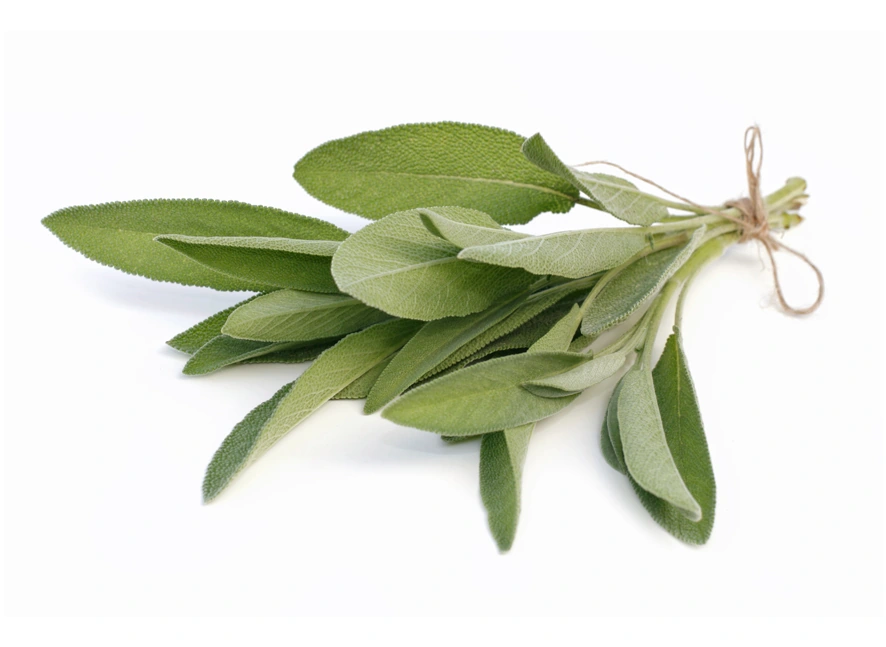
What is sage, and why is it linked to memory?
Sage is a woody, grey-green herb in the mint family whose best-known culinary species, salvia officinalis, is the same one researchers reach for when they study cognition. Beyond the dinner plate, sage leaves are rich in aromatic compounds — rosmarinic acid, carnosic acid and volatile oils — that have drawn scientific curiosity. The memory association is ancient: European herbals recommended sage for a “quick” mind for centuries before anyone could measure attention in a lab. NCCIH keeps a short factual page on sage, which is the right place to start rather than a supplement advertisement (NIH NCCIH).
Which part of the plant matters?
The leaf is where sage concentrates its active constituents, and drying or extracting it increases their density. This is the crux of the topic: a pinch of dried sage on a roast is not the same as the standardised leaf extract used in research, so claims that travel from the lab to the label have to be read carefully.
What does the science say about sage cognitive support?
Sage cognitive support is an area of genuine but early research, where several small human trials of concentrated extracts have reported short-term changes in measures of attention, alertness and word recall. A number of these studies used standardised Salvia officinalis and Spanish sage preparations in healthy adults, tested over hours rather than months. The signals are interesting, but the trials are small, short and not always replicated, so the honest summary is “promising and unproven,” not “established.”
How might sage act in the brain?
One frequently discussed mechanism is that certain sage compounds can inhibit acetylcholinesterase, the enzyme that breaks down acetylcholine — a neurotransmitter central to learning and memory. In simple terms, this laboratory property could mean more of that messenger stays available for a while. But a test-tube property is not proof of a real-world benefit, and it is no substitute for medical care.
| Sage constituent | What it is | Why researchers note it |
|---|---|---|
| Rosmarinic acid | Polyphenol | Studied broadly as an antioxidant compound found across mint-family herbs. |
| Carnosic acid | Diterpene | A fat-soluble compound of interest in cellular research on the herb. |
| 1,8-cineole | Volatile oil | An aromatic constituent linked in some studies to alertness and mood. |
| Thujone | Volatile compound | Present in some sage oils; the reason concentrated extracts are dose-limited. |
The takeaway from the chemistry is nuance, not hype: sage contains genuinely interesting molecules, some best kept modest in a daily formula. That balance is the logic behind putting sage in a broader blend rather than a solo “memory pill.”
See the exact dose in Myco Max →
How does salvia officinalis fit the Myco Max formula?
In Myco Max, salvia officinalis is a supporting botanical rather than the headline act, contributing to the herbal side of a formula led by functional mushrooms. The blend pairs lion's mane and cordyceps — the two most talked-about mushrooms for cognitive wellness — with rhodiola, gotu kola, tribulus and sage, delivered as fast liquid drops rather than a capsule. Sage's role is to round out that botanical layer, drawing on its long folk association with a “quick” mind.
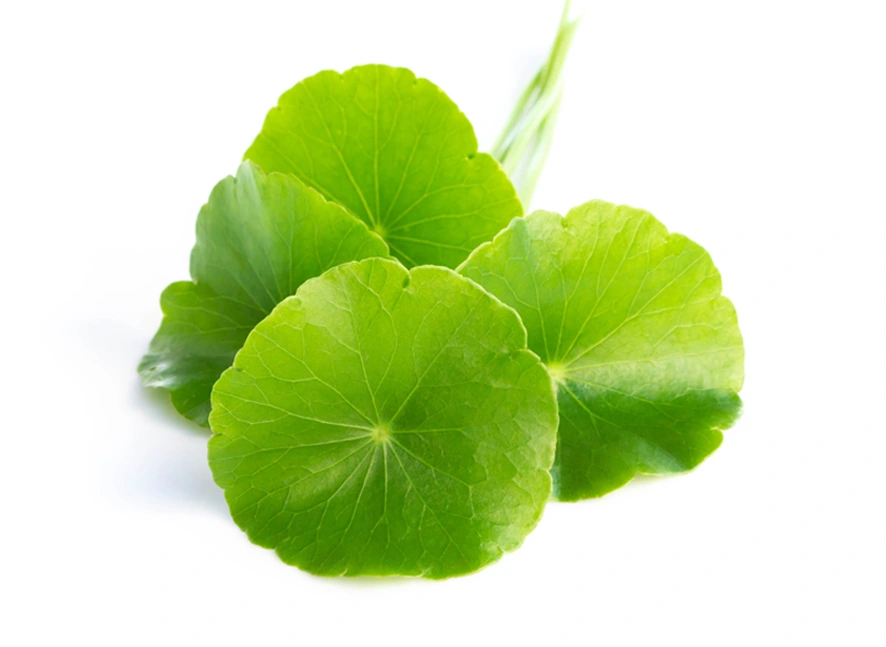
Formulating this way is deliberate: no single herb is asked to do everything, which keeps individual amounts sensible and lets the mushrooms lead. For the mushroom side of the story, our companion piece on lion's mane and cordyceps for brain health goes deeper, and the full ingredients section lists everything in the dropper. For wider context, the guide to supporting memory and focus naturally shows where any supplement fits.
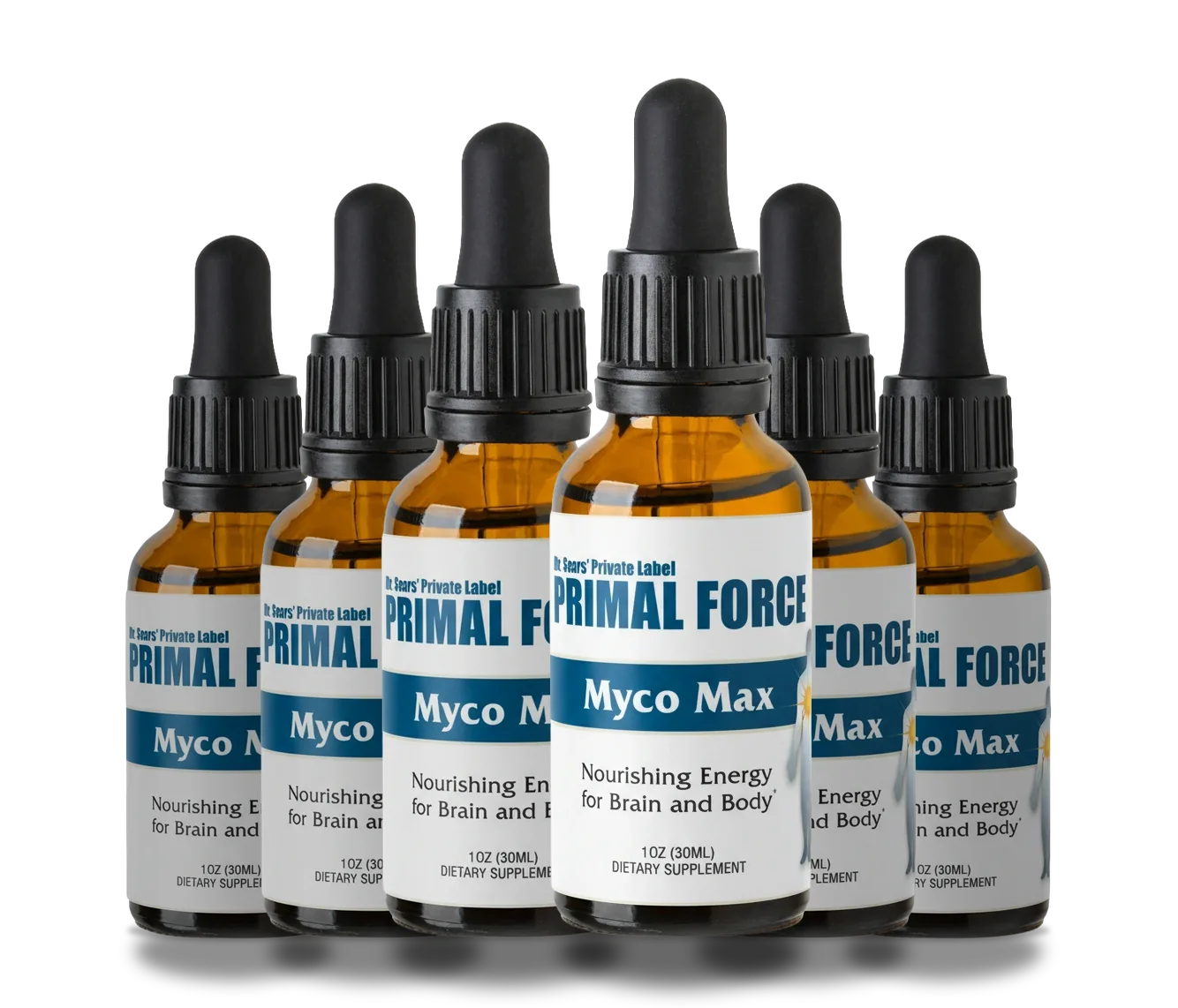
Sage, mushrooms and adaptogens in one dropper
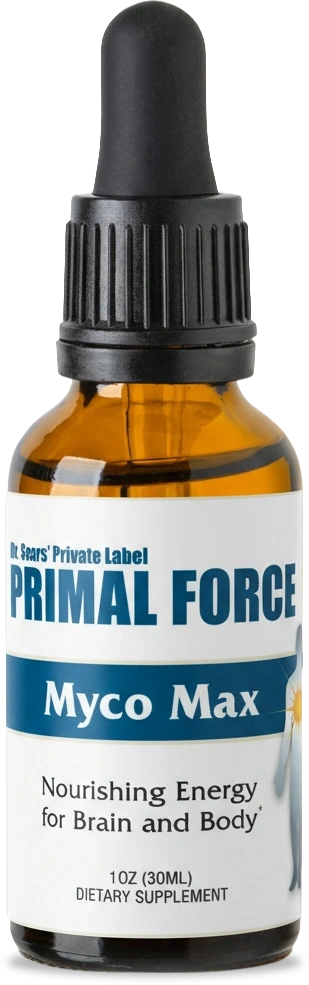
Myco Max is a once-daily liquid pairing lion's mane and cordyceps with rhodiola, gotu kola, tribulus and sage. The six-bottle bundle is the best value at $49 per bottle, with free U.S. shipping and a 90-day guarantee.
Check today's Myco Max pricing — from $49/bottleWhat are the broader sage herb benefits?
Sage herb benefits reach beyond the memory folklore into everyday culinary and traditional-wellness use, which is part of why the plant has stayed in kitchens and apothecaries for so long. As a food, sage is a flavourful source of aromatic antioxidants. None of this amounts to a medical claim: sage is a well-loved culinary herb with an interesting, still-emerging cognitive research angle.
Is sage an antioxidant herb?
Sage is often described as antioxidant-rich because its polyphenols, including rosmarinic acid, can neutralise reactive molecules in laboratory tests. That is a real property shared with rosemary and other mint-family herbs, but antioxidant activity in a test tube does not automatically translate into a health outcome in a person.
How do you use sage for memory day to day?
Using sage for memory in everyday life means treating it as gentle, consistent support rather than an acute “study aid” before a test. Because the studied amounts come from concentrated extracts, cooking alone is unlikely to match them, and a standardised daily blend is the more reliable way to take a known quantity. Whatever the source, sage sits on top of the fundamentals — sleep, whole food and movement — that do the heavy lifting for a clear head.
| Way to take sage | Typical amount of active compounds | Best thought of as |
|---|---|---|
| Cooking with fresh or dried leaf | Low, and highly variable | Flavour first; a pleasant everyday habit |
| Sage tea or infusion | Low to moderate | A traditional, comforting ritual |
| Standardised extract in a blend | Consistent, label-defined | A measured daily amount, as in Myco Max |
| High-dose single-herb extract | High; thujone-limited | Best used with professional guidance |
The practical point is consistency. Botanicals build their support gradually, so most people take a formula at the same time each day and give it several weeks — which is why multi-month supplies are popular. Compare the packages and pricing on the homepage.
How does sage compare with the other Myco Max botanicals?
Sage is one voice in a small chorus of botanicals, each with its own traditional role. The table below places sage next to its formula-mates — not as a ranking, but to show why several complementary ingredients are combined rather than relying on one.
| Botanical | Category | Traditional / general role |
|---|---|---|
| Sage (salvia officinalis) | Culinary herb | Long folk history connected to memory and a “quick” mind. |
| Lion's mane | Functional mushroom | One of the most studied mushrooms for cognitive wellness. |
| Cordyceps | Functional mushroom | Traditionally tied to stamina and cellular energy. |
| Rhodiola rosea | Adaptogen | An arctic root used to support resilience against everyday fatigue. |
| Gotu kola | Traditional tonic | An Ayurvedic staple used as a calming tonic for the mind. |
Who should be cautious with sage?
Sage is a wellness ingredient rather than a medicine, and concentrated forms deserve respect. Culinary sage is widely eaten and well tolerated, but high-dose extracts are more potent and some contain thujone, best limited. Speak with your doctor before using concentrated sage if you are pregnant or nursing, under 18, have a seizure disorder, take medication, or have a diagnosed condition — and see a professional about persistent changes in memory or concentration. Sage does not diagnose, treat, cure or prevent any disease.
Frequently asked questions
Is sage really good for memory?
Sage has a long folk reputation for memory, and several small human studies of concentrated sage extracts have reported short-term effects on aspects of attention and recall. The evidence is early and modest, so sage is best seen as gentle support rather than a proven treatment for any condition.
What is salvia officinalis?
Salvia officinalis is the botanical name for common garden sage, the same grey-green culinary herb used in cooking. It belongs to the mint family and is the species most often studied when researchers look at sage and cognition.
How does sage fit into the Myco Max formula?
In Myco Max, sage is one of several supporting botanicals alongside the lead functional mushrooms lion's mane and cordyceps, plus rhodiola, gotu kola and tribulus. It contributes to the herbal side of a once-daily liquid dropper rather than acting alone.
How much sage do you need for cognitive support?
Research has used concentrated extracts rather than the pinch of sage on a dinner plate, and effective amounts vary by preparation. Because doses differ across products, check the supplement facts panel on any formula, including Myco Max, rather than assuming a kitchen quantity is comparable.
Is sage safe to take every day?
Culinary sage is widely eaten and generally well tolerated, but concentrated extracts are more potent and some contain a compound called thujone that is best limited. People who are pregnant or nursing, have seizures, or take medication should ask a doctor before using concentrated sage.
Can I just cook with sage instead of taking a supplement?
Cooking with sage is pleasant and safe for most people, but the amounts studied for cognition are far higher than a culinary sprinkle. A standardised botanical blend such as Myco Max is designed to deliver a consistent daily amount, which cooking cannot reliably match.
Try Myco Max risk-free for 90 days →
Myco Max is a dietary supplement, not a treatment for any medical condition. These statements have not been evaluated by the Food and Drug Administration. This product is not intended to diagnose, treat, cure or prevent any disease. Always consult a qualified healthcare professional about your individual needs.
References & further reading
- National Center for Complementary and Integrative Health (NCCIH). Sage. nccih.nih.gov/health/sage
- Examine.com. Sage (Salvia officinalis). examine.com/supplements/sage
- National Institutes of Health, Office of Dietary Supplements. Dietary Supplements — What You Need to Know. ods.od.nih.gov/factsheets/WYNTK-Consumer
- Scholey AB, Tildesley NT, Ballard CG, et al. An extract of Salvia (sage) with anticholinesterase properties improves memory and attention in healthy older volunteers. Psychopharmacology, 2008. PMID 18350281
- Tildesley NT, Kennedy DO, Perry EK, et al. Salvia lavandulaefolia (Spanish sage) enhances memory in healthy young volunteers. Pharmacology Biochemistry and Behavior, 2003. PMID 12895685
These references describe the ingredients and habits in general terms and do not constitute evidence that any product treats, cures or prevents any condition.
Keep reading: lion's mane and cordyceps for brain health · nootropic mushrooms for focus and clarity · the Myco Max blog · homepage.